STCA collaborated with graduates of the University of Arts London to test a different kind of careers fair.

Words written by Hannah Ogahara. She is one of the primary project leads that made this event a success. She is also a founding member of the Compost Collective.
I studied an MA in Regenerative Design at Central Saint Martins. The simplest way I’ve found to explain what that means is that it sits somewhere between ecology, anthropology, and design. If sustainability is about reducing negative impact on the planet, then regenerative design is about designing for positive impact: creating systems, spaces, and practices that actively help people and environments to thrive.
Alongside Regenerative Design, Central Saint Martins offers many courses with names that don’t always make immediate sense to employers: Material Futures, Biodesign, Navigating Complexities, to name just a few. These courses are rich, rigorous, and deeply relevant to the challenges organisations face today, but a common question remains:
What can someone who studied one of these courses actually do for your organisation?
Feeling Unseen at the Starting Line
I went along to a university careers fair hoping to find work. Instead, I left feeling largely unseen. The organisations present included a children’s costume company, a medical company looking for help with graphics and videos, a luxury fashion brand, and an architecture firm specialising in hotels.
All valid businesses, but none felt able to recognise or translate the skills I had developed. And I knew I wasn’t alone in this feeling. Many of my classmates were struggling to get their first role after graduation, despite being highly capable, adaptable, and motivated.
Around this time, I had been approached by Sarah Elie from the Somers Town Community Centre about working together. In one of our conversations, I mentioned how difficult it was for graduates like us to find work. Sarah listened with generous ears and shared the story of her daughter, who had struggled to land her first job. Sarah gave her some work experience at Somers Town, and that single opportunity became a turning point, her daughter is now working in a role she loves in Peckham.
What stood out was something very simple but very powerful: landing the first role is often the hardest part. Sometimes, all you need is someone willing to give you a chance.
Translating Skills, Creating Connections
This brought us back to the question: for someone unfamiliar with regenerative or interdisciplinary design education, how do you understand what these graduates can offer?
From my own experience, I knew the answer wasn’t vague or abstract. Graduates from these courses can:
- Conduct in-depth research and interviews
- Analyse complex systems and challenges
- Develop thoughtful, creative design solutions
- Communicate ideas visually and verbally
- Work confidently in multidisciplinary teams
- Engage meaningfully with communities
The challenge wasn’t capability, it was translation. How could we bridge the gap between graduates and organisations who might benefit from their skills, but didn’t yet know how?
The Speed Networking Careers Event
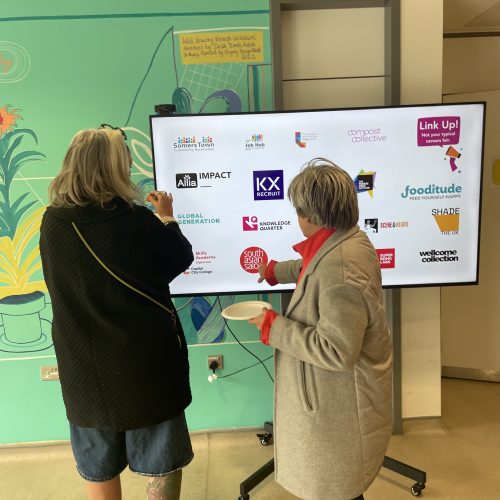
Sarah suggested running a speed networking careers event. Somers Town were perfectly positioned to make the introductions, offer a welcoming venue, and even provide catering. Over the course of nine months, we checked in regularly, shaping the idea into something practical and generous.
I organised the event alongside my friend Yoshimi, who studied MA Design for Social Innovation and Sustainable Futures at London College of Communication. Together, we were genuinely impressed by how enthusiastically partner organisations came on board. There was a real openness and curiosity from employers who wanted to meet graduates, learn about their skills, and explore potential collaborations.
Once the list of organisations was confirmed, we asked students and recent graduates to rank who they’d most like to speak with. We also included a few “wild card” options, opportunities to explore unexpected synergies and conversations beyond the obvious fit.
A Room Full of Energy and Possibility
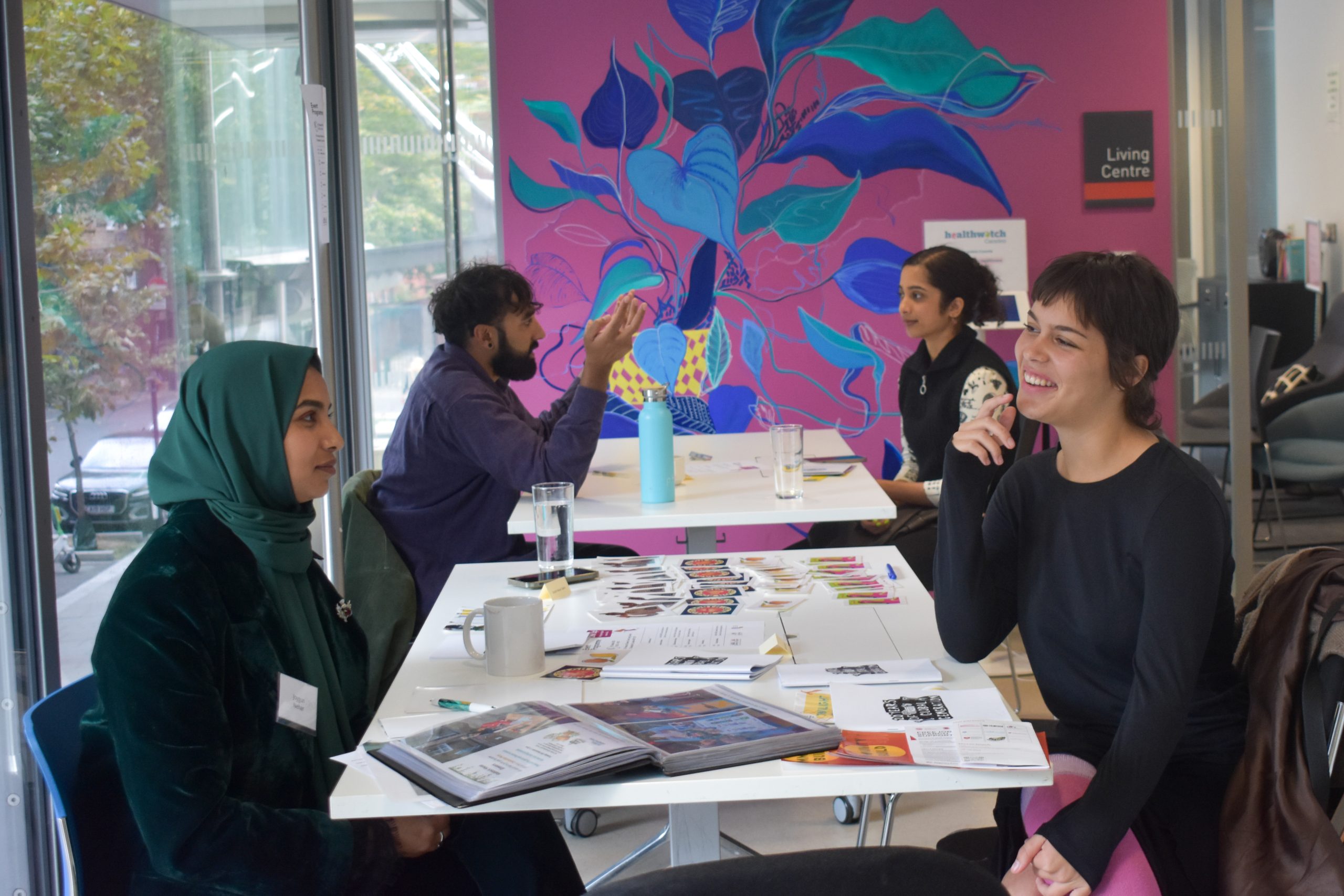
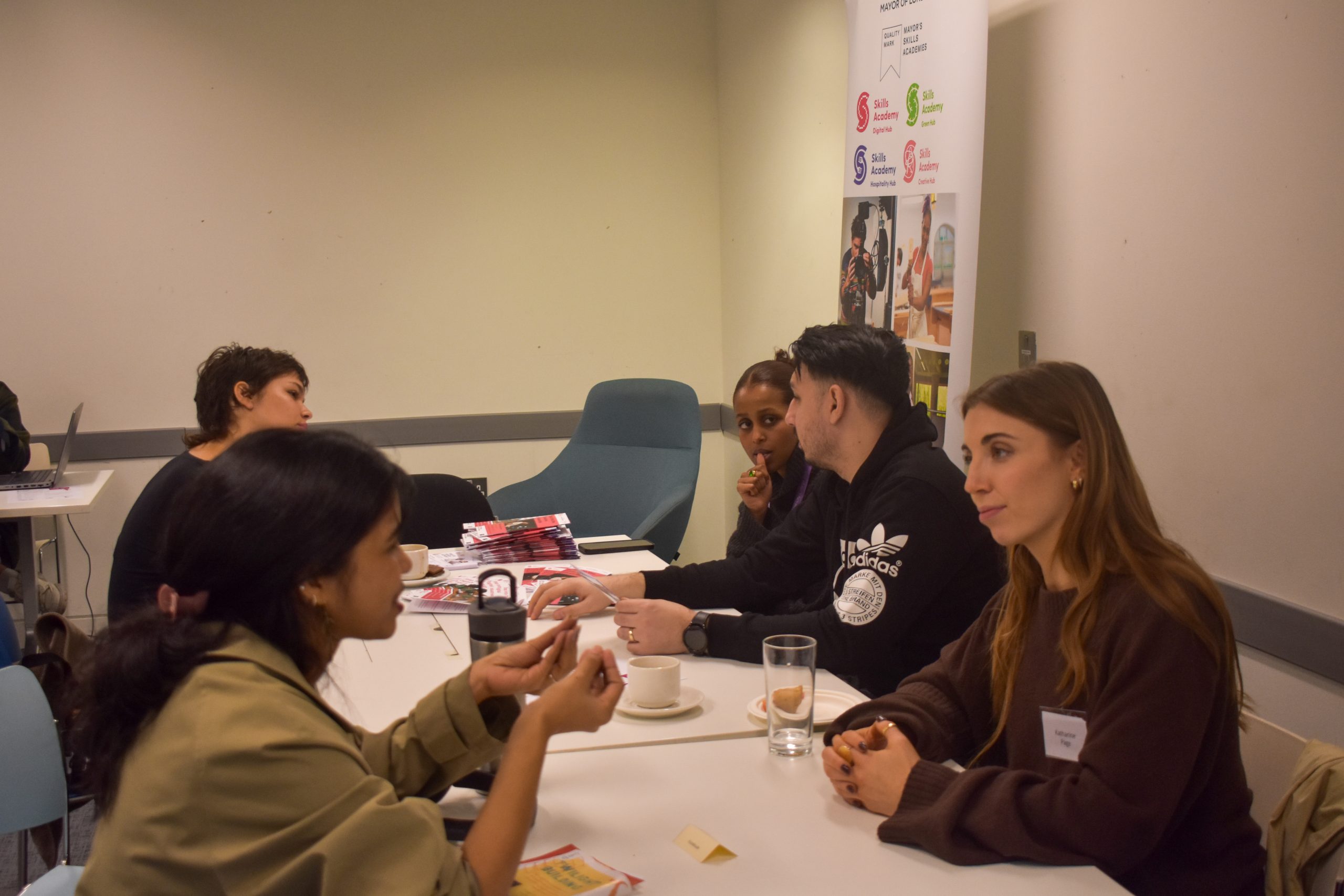
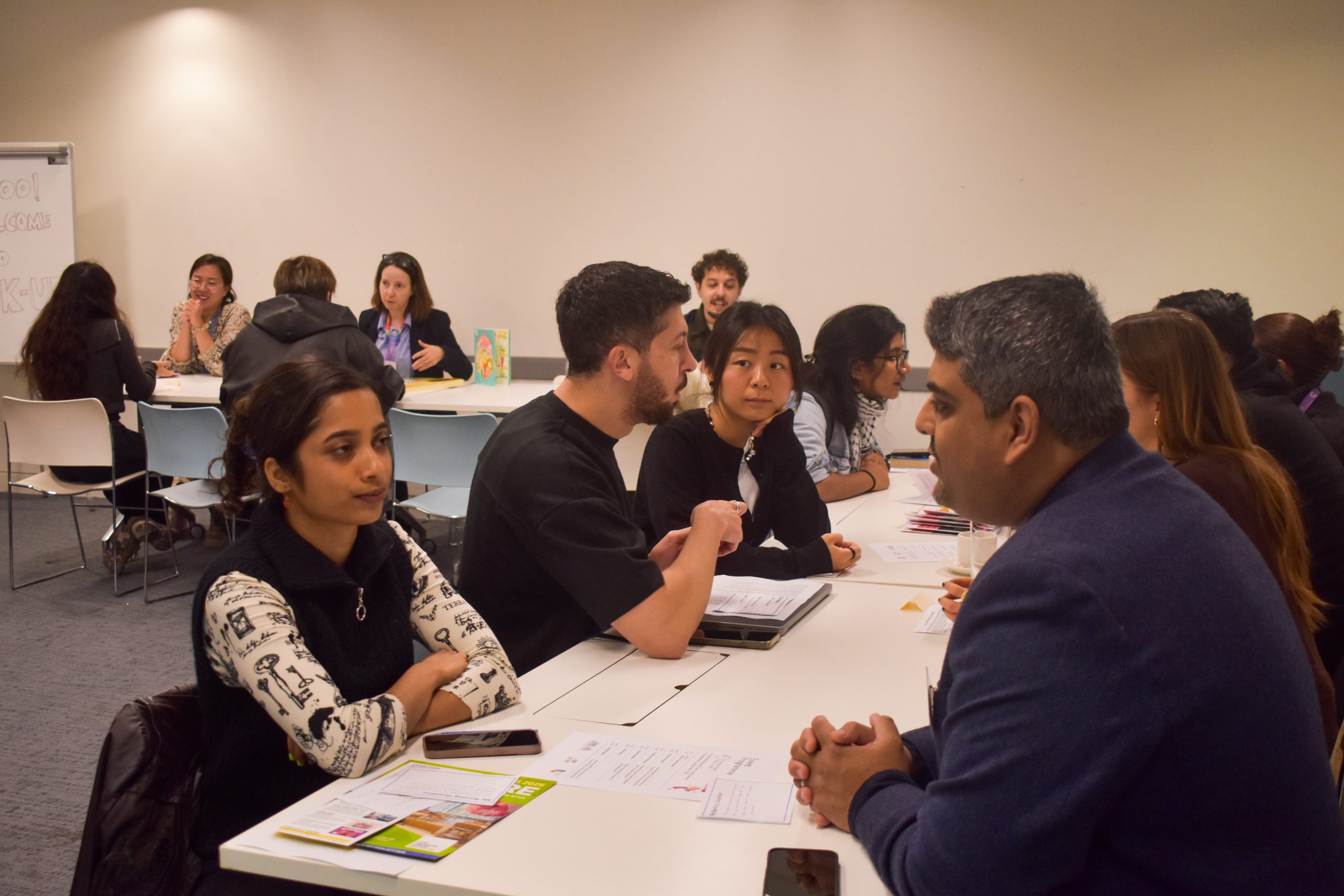
On the day, the event went swimmingly. The energy in the room was electric. Graduates from different UAL courses and colleges filled the space, and most participants were able to have one-to-one or small group conversations in each session.
What mattered most was how empowered people felt. Graduates asked honest questions about career paths, experience, and CVs. Organisations spoke openly about what they look for, what they can offer, and how unconventional backgrounds can be an asset rather than a risk.
It didn’t feel like a traditional careers fair. It felt human, generous, and full of possibility.
Why This Matters
Creative, regenerative, and interdisciplinary graduates have so much to offer, especially to community organisations, charities, and forward-thinking businesses navigating complex social and environmental challenges. But talent doesn’t thrive in isolation. It needs relationships, translation, and trust.
This event was about building those bridges and reminding all of us that sometimes, meaningful careers begin not with a perfect job description, but with a conversation and a chance.
Somers Town Job Hub
Words written by Hannah Ogahara. She is one of the primary project leads that made this event a success. She is also a founding member of the Compost Collective.
I studied an MA in Regenerative Design at Central Saint Martins. The simplest way I’ve found to explain what that means is that it sits somewhere between ecology, anthropology, and design. If sustainability is about reducing negative impact on the planet, then regenerative design is about designing for positive impact: creating systems, spaces, and practices that actively help people and environments to thrive.
Alongside Regenerative Design, Central Saint Martins offers many courses with names that don’t always make immediate sense to employers: Material Futures, Biodesign, Navigating Complexities, to name just a few. These courses are rich, rigorous, and deeply relevant to the challenges organisations face today, but a common question remains:
What can someone who studied one of these courses actually do for your organisation?
Feeling Unseen at the Starting Line
I went along to a university careers fair hoping to find work. Instead, I left feeling largely unseen. The organisations present included a children’s costume company, a medical company looking for help with graphics and videos, a luxury fashion brand, and an architecture firm specialising in hotels.
All valid businesses, but none felt able to recognise or translate the skills I had developed. And I knew I wasn’t alone in this feeling. Many of my classmates were struggling to get their first role after graduation, despite being highly capable, adaptable, and motivated.
Around this time, I had been approached by Sarah Elie from the Somers Town Community Centre about working together. In one of our conversations, I mentioned how difficult it was for graduates like us to find work. Sarah listened with generous ears and shared the story of her daughter, who had struggled to land her first job. Sarah gave her some work experience at Somers Town, and that single opportunity became a turning point, her daughter is now working in a role she loves in Peckham.
What stood out was something very simple but very powerful: landing the first role is often the hardest part. Sometimes, all you need is someone willing to give you a chance.
Translating Skills, Creating Connections
This brought us back to the question: for someone unfamiliar with regenerative or interdisciplinary design education, how do you understand what these graduates can offer?
From my own experience, I knew the answer wasn’t vague or abstract. Graduates from these courses can:
- Conduct in-depth research and interviews
- Analyse complex systems and challenges
- Develop thoughtful, creative design solutions
- Communicate ideas visually and verbally
- Work confidently in multidisciplinary teams
- Engage meaningfully with communities
The challenge wasn’t capability, it was translation. How could we bridge the gap between graduates and organisations who might benefit from their skills, but didn’t yet know how?
The Speed Networking Careers Event
Sarah suggested running a speed networking careers event. Somers Town were perfectly positioned to make the introductions, offer a welcoming venue, and even provide catering. Over the course of nine months, we checked in regularly, shaping the idea into something practical and generous.
I organised the event alongside my friend Yoshimi, who studied MA Design for Social Innovation and Sustainable Futures at London College of Communication. Together, we were genuinely impressed by how enthusiastically partner organisations came on board. There was a real openness and curiosity from employers who wanted to meet graduates, learn about their skills, and explore potential collaborations.
Once the list of organisations was confirmed, we asked students and recent graduates to rank who they’d most like to speak with. We also included a few “wild card” options, opportunities to explore unexpected synergies and conversations beyond the obvious fit.
A Room Full of Energy and Possibility
On the day, the event went swimmingly. The energy in the room was electric. Graduates from different UAL courses and colleges filled the space, and most participants were able to have one-to-one or small group conversations in each session.
What mattered most was how empowered people felt. Graduates asked honest questions about career paths, experience, and CVs. Organisations spoke openly about what they look for, what they can offer, and how unconventional backgrounds can be an asset rather than a risk.
It didn’t feel like a traditional careers fair. It felt human, generous, and full of possibility.
Why This Matters
Creative, regenerative, and interdisciplinary graduates have so much to offer, especially to community organisations, charities, and forward-thinking businesses navigating complex social and environmental challenges. But talent doesn’t thrive in isolation. It needs relationships, translation, and trust.
This event was about building those bridges and reminding all of us that sometimes, meaningful careers begin not with a perfect job description, but with a conversation and a chance.
Somers Town Job Hub

Somers Town Community Association, 150 Ossulston Street London NW1 1EE
Registered Charity number: 292440
Company Limited by Guarantee 1903408
☎ 020 7388 6088
☎ 0300 102 7822
Somers Town Community Association is a Charity dedicated to providing a meaningful and positive influence at every level of people’s lives.
Somers Town Community Association, 150 Ossulston Street London NW1 1EE
Registered Charity number: 292440 Company Limited by Guarantee 1903408
☎ 020 7388 6088
☎ 0300 102 7822
Somers Town Community Association is a Charity dedicated to providing a meaningful and positive influence at every level of people’s lives.